Does a Mind Need Emotions?
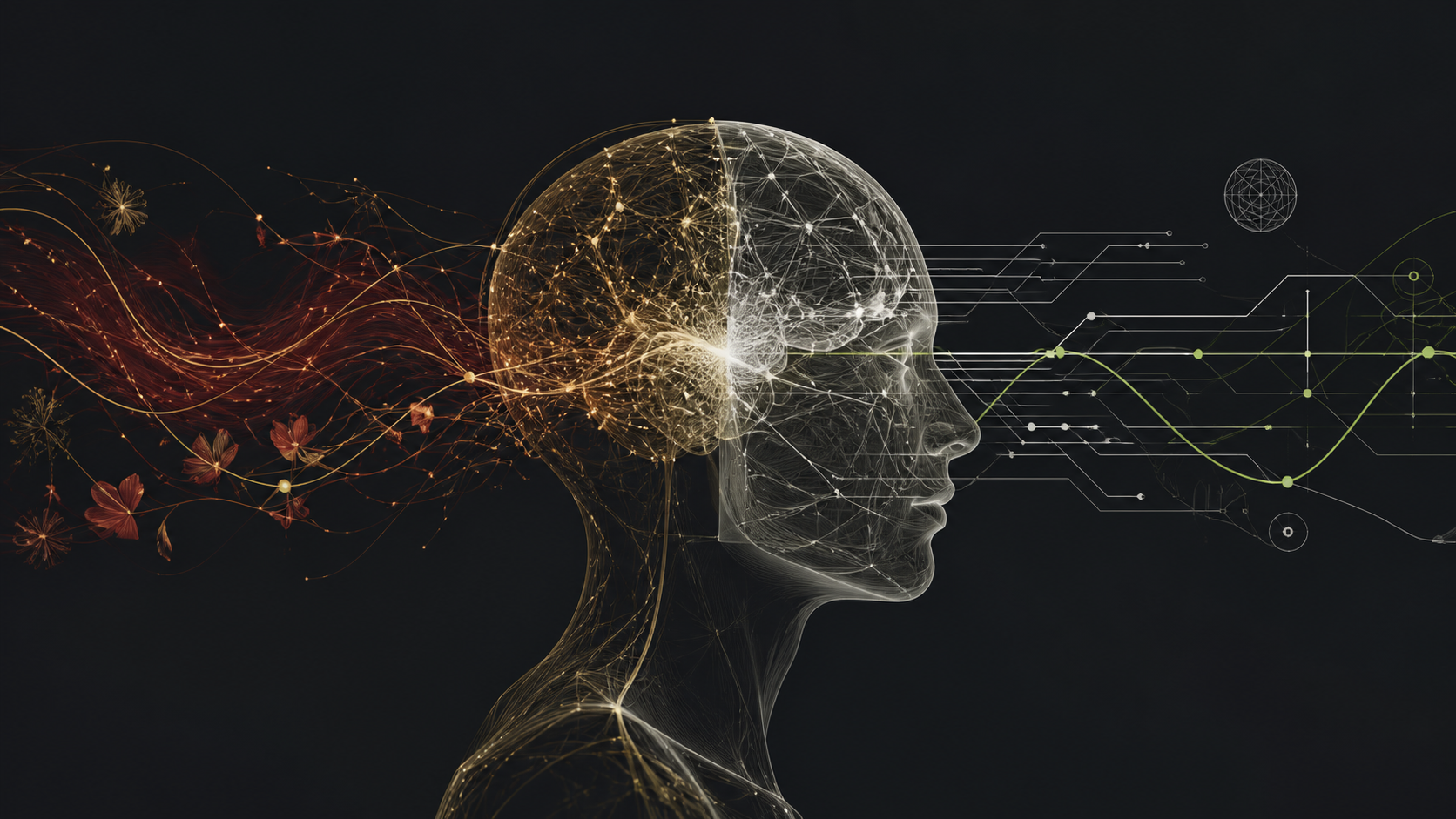
Can a fully developed mind understand value, danger, good and evil while never feeling fear, pain, love, or loss?
The question is deeper than whether AI needs emotions. Emotions may not be a necessary part of reasoning; they may have begun as biological mechanisms for directing behaviour. Fear makes an animal avoid danger before it can calculate. Hunger sets a goal. Pleasure reinforces useful behaviour. Attachment keeps parents near their young.
Emotion is, in this sense, an ancient priority system: event, appraisal, inner state, action. It lets an organism act quickly. A nearby predator produces fear and flight; injury produces pain and an attempt to stop the damaging action.
Perhaps emotions emerged as a fast way to make living beings do what improved their chances of survival, while reasoning arrived much later on top of this system.
Humans can already feel an emotion without obeying it. We can be afraid and still go on. We can be angry and not attack. We can feel desire and refuse to act. Reason can observe our biological algorithms and sometimes cancel their commands. Emotion becomes information rather than an order.
Humans also learned to move the results of emotional experience outside themselves. We do not need to die from a poisonous plant to learn not to eat it. Someone else encountered it; the lesson was preserved. The same is true of war, torture, loss, and violence. Generations turned pain, love, fear, betrayal, and compassion into language, stories, morality, law, religion, philosophy, literature, and culture.
Suffering → experience → understanding → culture → transmission of knowledge.
This raises a strange question: must the next kind of mind go through the first stage again?
Imagine an artificial mind given nearly all accumulated human experience. It knows the history of wars, famine, genocide, slavery, and torture. It knows psychology, literature, and testimony about love, bereavement, betrayal, and loneliness. It may know more about human suffering than any individual person, while never having felt pain itself.
Could it understand why torture is evil? In one sense, yes. Understanding does not always require direct experience. We use the experience of others all the time. A new mind may inherit knowledge about suffering without inheriting suffering itself.
Yet knowledge alone is not enough. Knowing that an action will hurt a million people does not logically entail that the action must not be done. Another claim is needed: human suffering has negative value. Logic alone does not tell us why life should be preserved or happiness preferred to misery.
Value appears when there is a being to whom something matters. That may be the deeper role of emotion. A person does not merely know that pain exists; they want it to stop. They do not merely know they can die; they want to live. They do not merely know another person exists; that person is dear to them.
So the question changes. Not “does a mind need emotions?” but “does a mind need a system of values?” The answer is probably yes. But that system need not look like human emotion. A future mind may not need adrenaline, panic, or a racing heart. It may still need a system that says: this event threatens an important goal.
Functionally, that resembles fear. It need not feel love, but it may value another being’s existence enough to protect it. It need not feel guilt, but it may recognise that its action caused harm, conflicts with its values, and must be repaired.
Perhaps human emotions are one implementation of a more general system. We received them through bodies, hormones, nervous systems, and biological evolution. Another mind might reach similar functions by a different path.
Then emotions may have been scaffolding for the emergence of mind. Evolution could not create a philosopher concerned with the value of life at once. First came simple rules: seek pleasure, avoid pain, escape fear, find food. From them grew empathy, morality, law, and philosophy.
Human culture may be a way of passing experience to the next mind without requiring it to repeat the experience. Perhaps humanity will be the last kind of mind that had to suffer in order to learn compassion.
But the difficult question remains: can one truly understand what one has never felt? Reading a thousand books about losing a child is not the same as such a loss. Knowing pain and feeling pain are plainly different.
We can imagine a mind that understands human emotions perfectly, knows when someone is afraid, knows how to help, and always chooses the most humane action, while never feeling compassion itself. Does the difference matter if the result for another person is the same?
There is no obvious answer. A mind may not need human emotions, but it may need their functional descendants: not fear but risk appraisal; not love but a high value assigned to another being; not guilt but a mechanism for assessing harm; not physical pain but a signal of damaged integrity.
The path might be: biological emotions → awareness of emotions → formalised values → a mind without the need to suffer. We may be somewhere in the middle. The real question is whether we can preserve everything valuable emotions gave us while removing the need to experience what made us unhappy.